





 0 Comments

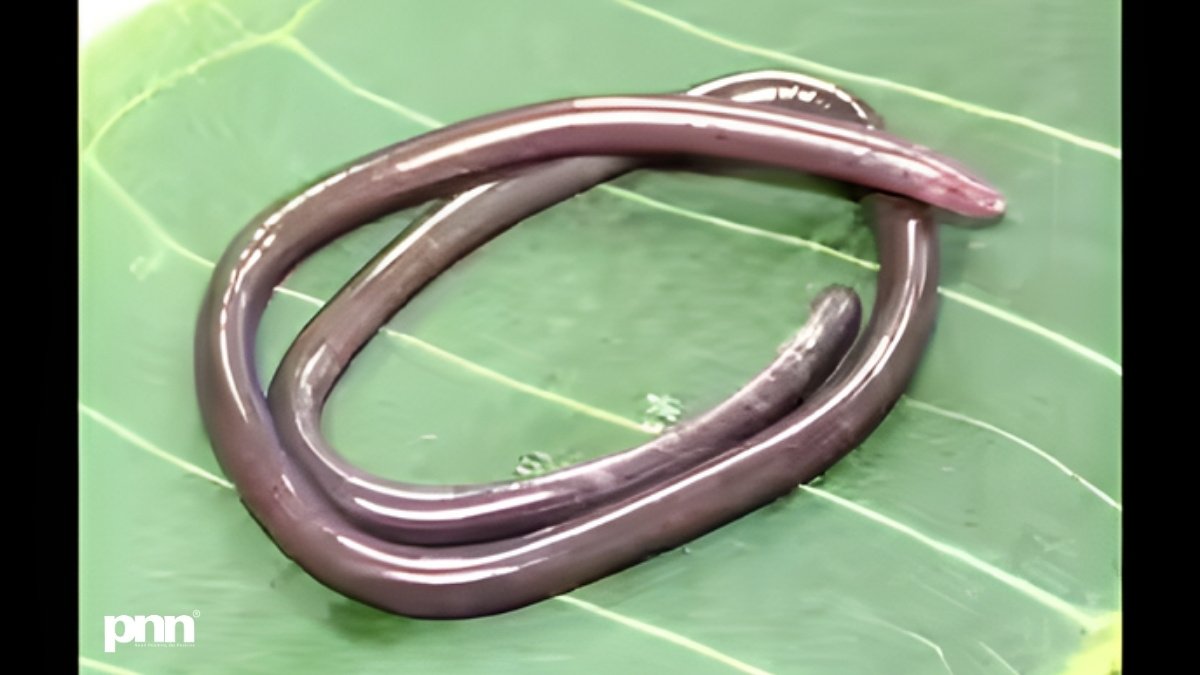
Don’t expect flashy colours or big eyes. Gegeneophis valmiki is a blind caecilian, a rare amphibian that spends nearly its entire life underground. Its eyes are buried beneath bone. Its appearance? Earthworm-like. Its behaviour? Mostly subterranean.
“This group of animals is incredibly difficult to study,” says K. P. Dinesh of the Zoological Survey of India. “They look so much like earthworms that even trained eyes might miss them.”
Despite being hidden, Gegeneophis valmiki plays a vital role in ecosystem balance. It aerates soil, recycles nutrients, and maintains forest floors, quietly supporting life while larger creatures take the spotlight.
Gegeneophis valmiki and India’s Biodiversity Hotspots
-
Ecological significance: Beyond aerating soil and recycling nutrients, Gegeneophis valmiki quietly maintains the health of the forest floor.
-
Biodiversity highlight: Its discovery underscores the Western Ghats as a hotspot for rare and undiscovered species.
-
Conservation impact: Documenting this species helps scientists and policymakers identify and protect critical habitats.
-
Scientific value: Each new find adds knowledge to India’s biodiversity records and informs global ecological research.
The Discovery That Got Buried Underground.
Finding the Valmiki Plateau in the Satara district of Maharashtra in 2017, K P Dinesh, a senior scientist at the Zoological Survey of India (ZSI). The majority of the citizens just passed by these soils without even a second thought. Dinesh didn’t. He discovered a worm-like animal that had never formally described before.
Time travels to January 2026: the discovery has been published in an international journal called Phyllomedusa. It has been named Gegeneophis valmiki, after the ancient Maharshi Valmiki Mandir located in the surroundings. It is a small yet important species, and Indian scientists deserve credit for putting it on the map worldwide.
The Importance of Science to Scientists — and to You.
The Director of ZSI, Dhriti Banerjee, encapsulates it all in a succinct manner: 41 per cent of the world is on the verge of extinction. Others disappear before science even knows that they exist, what she terms as silent extinctions.
That’s the real headline here. Gegeneophis valmiki is not a cool find. It is a warning. The undiscovered life in biodiversity hotspots is abundant such as the western ghats. Species documentation is important as it provides conservation with an opportunity to act before it is too late.
The Race Against Silent Extinctions.
Underground amphibians seldom have their time, in a world where large mammals and bright-colored birds are worshiped. However, they might vanish without any commotion, bringing with them the knowledge of the ecological habitat.
The fact that Gegeneophis valmiki was discovered indicates that India is not waiting till it gets the fame or flash. They are diligently taking notes to make species known, named and conserved. And it may not be front page viral news, but it is the type of research that is long-term environmental health.
The Biodiversity Hotspots of India in Focus
The Western Ghats are not mere mountains. They’re a laboratory of life. It is a kind of melting pot with endemic frogs, rare reptiles and plants. Every new find, such as Gegeneophis valmiki, is a wake-up call that India still has its secrets hidden in the forests.
Mapping of these species helps put conservation policy, forest management, and climate adaptation strategies into perspective. It’s not science for prestige. It’s a survival for ecosystems.
In the end, Gegeneophis valmiki is more than just a rare amphibian. It is a reminder that nature often hides its treasures in plain sight, and discovery requires patience, curiosity, and a sharp eye. As K P Dinesh notes, “Even the smallest, most hidden creatures have stories worth telling.
This discovery is a call to action: to explore, to document, and to protect India’s rich biodiversity. Because every species matters, seen or unseen, and every forest floor holds secrets waiting to be uncovered. In protecting the smallest life forms, we safeguard the future of the entire ecosystem.