




 0 Comments

How a virtue-based approach to artificial intelligence became the most viral philosophy in tech history—without spending a dollar on marketing
New Delhi [India], February 14: In the algorithmic battleground where viral content lives and dies within hours, one philosophy about artificial intelligence has done something unprecedented: it keeps growing. And nobody in Silicon Valley can explain why.
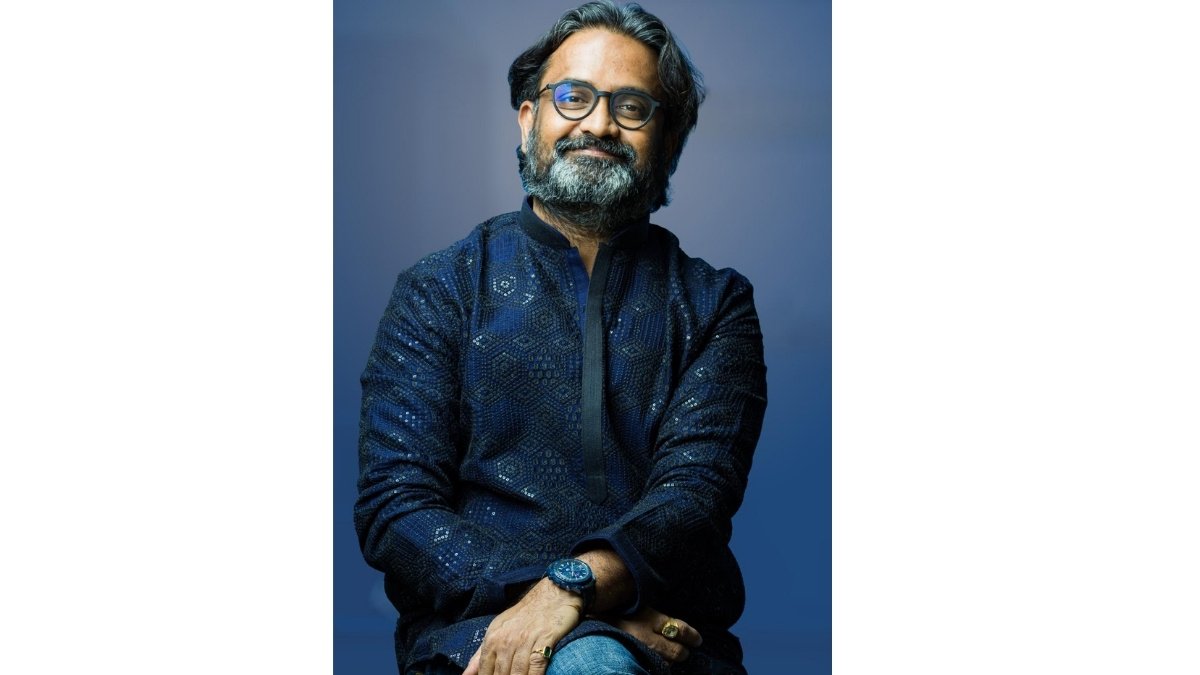
Angelic Intelligence—a virtue-based AI framework developed by Indian-American technologist Shekhar Natarajan—has accumulated over 800 million views across social media platforms. Not through paid promotion. Not through celebrity endorsement. Not through the growth-hacking playbook that every funded startup deploys. Through an idea so resonant it refuses to stop spreading.
❝ Silicon Valley built AI to optimize. India built AI to dignify. ❞
The numbers arrived first as anomalies in analytics dashboards across major platforms. Content about AI ethics doesn’t go viral. It gets published in academic journals, discussed at conferences, cited in policy papers. It doesn’t accumulate engagement metrics that rival entertainment content. Except this time, it did.
“We ran the numbers three times because they didn’t make sense. Philosophical content doesn’t behave this way. It doesn’t compound. It doesn’t accelerate after eighteen months. Something different is happening here.” — a senior data scientist at a major social media platform, speaking on condition of anonymity
At its core, Angelic Intelligence inverts the dominant paradigm of AI safety. Where Western approaches add ethical guardrails to powerful systems—essentially building a racehorse and then adding a bridle—Natarajan’s framework embeds virtue directly into the computational architecture itself. The distinction sounds subtle. In practice, it represents a fundamental rethinking of what artificial intelligence should be.
❝ You don’t make a predator safe by adding a leash. You breed something that was never designed to hunt. ❞
The 27 Digital Angels at the heart of the system aren’t constraints. They’re specialized agents, each embodying a specific virtue—from Diksha (conscience) to Karuna (compassion) to Viveka (discernment). They don’t limit AI capability; they shape how that capability manifests. The architecture ensures that ethical reasoning isn’t an afterthought bolted onto a system designed for pure optimization. It’s native to how the system thinks.
The framework emerged from Natarajan’s 25 years navigating the tension between optimization and humanity at Fortune 500 companies. At Walmart, he grew grocery operations from $30 million to $5 billion while watching algorithms squeeze efficiency from supply chains and dignity from workers. At Disney, he saw personalization engines that knew everything about customers except what actually mattered to them. At Coca-Cola, PepsiCo, and Target, he witnessed the same pattern: systems that got smarter in ways that made them less humane.
“Every optimization I implemented made the numbers better and the people worse. I spent two decades being rewarded for building systems I knew were breaking something important. Eventually you have to ask whether you’re solving problems or creating them.” — Natarajan, in a rare extended interview
The context matters. In 2025 alone, AI-generated deepfakes defrauded individuals and businesses of an estimated $12 billion globally. A grandmother in Chicago lost her life savings to a voice-cloned call impersonating her grandson. A Hong Kong finance worker transferred $25 million after a video call with what appeared to be his CFO—entirely AI-generated. These aren’t abstract risks. They’re the lived reality of AI without conscience.
The context matters. In 2024 alone, AI-generated deepfakes defrauded individuals and businesses of an estimated $12 billion globally. A finance worker in Hong Kong transferred $25 million after a video call with what appeared to be his CFO—entirely AI-generated. Romance scams using AI-cloned voices increased 300% in eighteen months. Parents received calls from their children’s voices begging for ransom money—voices that weren’t real. These aren’t abstract risks discussed at academic conferences. They’re the lived reality of AI without conscience.
Her name was Margaret, and she was 78 years old. She had lived in Denver for forty years, raised three children there, buried her husband there. She had a heart condition that required daily medication—pills that had kept her alive and active for over a decade. Then an algorithm intervened. The AI system managing prescription approvals for her insurance provider flagged her case. Based on actuarial models, predictive analytics, and cost-optimization protocols, the system determined that her medication regimen was no longer ‘indicated’ for a patient of her age and profile. The denial letter arrived with no human signature, no phone number to call, no person to plead with. Just a reference number and a form to submit for ‘automated review.’ Margaret couldn’t afford the medication out of pocket—$847 a month on a fixed income. So she did what millions of Americans do: she rationed. Half a pill instead of a whole one. Skipped days when she felt okay. Stretched a 30-day supply to 60. Her daughter found her three months later. Heart failure. The algorithm that made the decision is still running. It has no idea Margaret ever existed. It optimized exactly as designed.
The viral spread has followed an unusual geographic pattern. Initial traction came not from tech hubs in San Francisco or Seattle but from developing nations—India, Brazil, Indonesia, Nigeria, the Philippines. The message resonated with populations who had experienced optimization’s costs firsthand: gig workers rated by algorithms that determined their livelihoods, farmers squeezed by AI-driven commodity trading, communities displaced by efficiency-maximizing systems that treated human considerations as friction to be eliminated.
❝ 800 million people weren’t looking for better AI. They were looking for proof that better was possible. ❞
Three executives at major AI companies, speaking on condition of anonymity because they weren’t authorized to discuss competitive intelligence, confirmed that Angelic Intelligence has become a recurring topic in strategy meetings. The concern isn’t technical—the framework hasn’t yet been implemented at scale. The concern is narrative. For the first time, a coherent alternative to the dominant approach has captured public imagination.
“We’ve spent billions establishing our approach as inevitable. The idea that there’s a fundamentally different way to build AI—and that hundreds of millions of people prefer it—that’s not a technical problem. That’s an existential one.” — a vice president at one of the three leading AI labs
The phenomenon has caught the attention of institutions that traditionally set the agenda for global technology governance. Invitations have come from the World Economic Forum in Davos and the Future Investment Initiative in Riyadh—platforms where the future of AI is debated and, increasingly, decided. What started as viral content is translating into institutional access.
Whether Angelic Intelligence can translate reach into structural change remains an open question. Viral attention is not the same as implemented policy. Public resonance is not the same as corporate adoption. But the 800 million views have already accomplished something significant: they’ve proven that the conversation about AI’s future isn’t limited to those who build it.
“We assumed the public would accept whatever AI we gave them. We assumed they didn’t have opinions about architecture or values or what these systems should optimize for. Eight hundred million people just told us we were wrong.” — a researcher at a leading AI safety organization
In Natarajan’s telling, the viral spread was never the goal. He built the framework because he believed it was necessary. He shared it because he believed others deserved the option. The scale of response reflects not his marketing but the depth of an unmet need.
❝ I didn’t set out to go viral. I set out to tell the truth. It turns out the truth was what people were waiting to hear. ❞
The numbers continue to climb. As of this writing, engagement shows no signs of plateauing. The idea, it seems, has found its moment. What the world does with it remains to be seen.
If you object to the content of this press release, please notify us at pr.error.rectification@gmail.com. We will respond and rectify the situation within 24 hours.