

 0 Comments

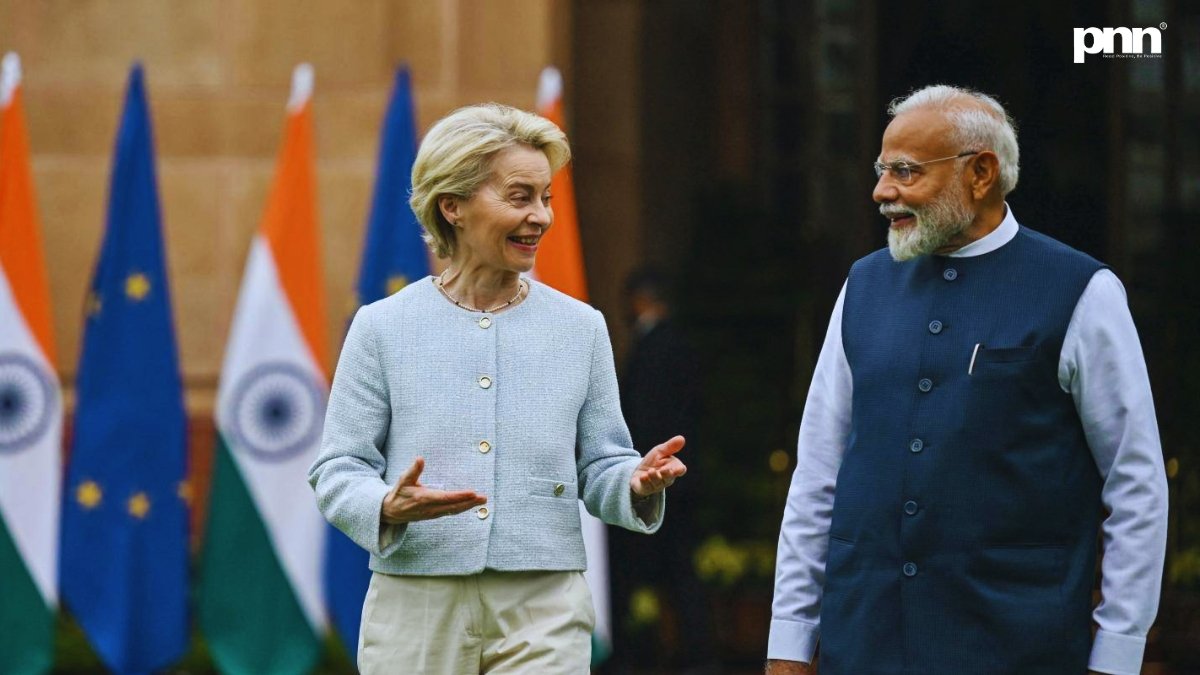
New Delhi: India-EU FTA: PM Modi made the announcement while addressing the Indian Energy Week virtually. No summit theatrics. No ceremonial delay. Just a statement that cut through weeks of speculation. The agreement between India and the European Union was signed on Monday, he said. The largest trade bloc India has ever locked in.
“This free trade agreement will strengthen confidence in India for every business and every investor in the world. India is working extensively on global partnerships in all sectors,”
– PM Modi
He called it what others already had. The mother of all deals. Not as hype, but as arithmetic. One agreement. Two massive economies. A reach that stretches across continents.
This India-EU Free Trade Agreement, PM Modi said, opens opportunities for 140 crore Indians and crores of Europeans. That number matters. Scale is the point. Trade is no longer a side conversation in foreign policy. It is the core.
India-EU Free Trade Agreement: PM Modi congratulates everyone associated with sectors such as textiles, gems, jewellery, leather, and shoes
The agreement represents 25 percent of global GDP and one-third of global trade. Those figures landed heavily because they redraw economic gravity. Few bilateral or bloc-level deals carry that weight.
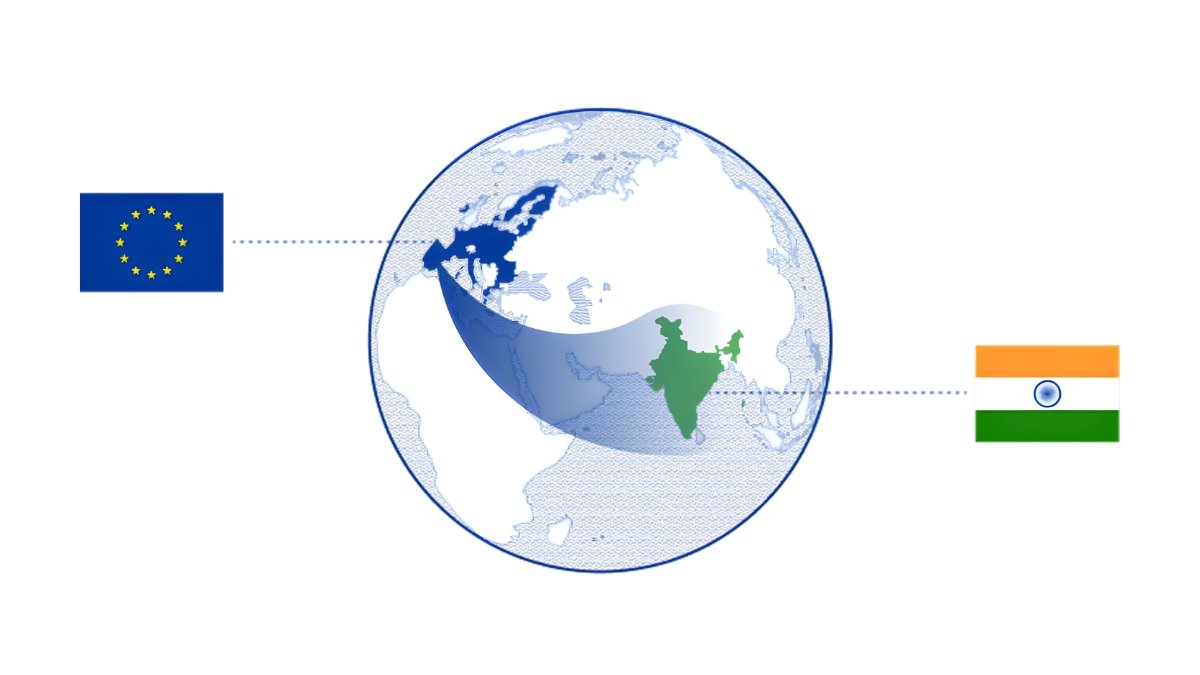
PM Modi framed it as coordination, not concession. Two economies aligning, not yielding. The FTA, he added, complements India’s agreements with Britain and the European Free Trade Association. A lattice, not a single bridge.
The India-EU Summit 2026 didn’t arrive with poetry. It arrived with paperwork, pressure, and decisions that had been parked for years.
Morning in Delhi felt narrower than usual. Roads trimmed. Corners guarded. Rajghat cordoned off because Europe was in town and memory still carries protocol.
The India-EU Summit 2026 opened in a world that keeps shedding assumptions. Alliances wobble. Supply chains twitch. Everyone is hedging. India isn’t hedging much.
Rajnath Singh spoke first, in effect. Technology and defence partnership. Signed. A step closer, he said, in a complex global environment. Not a dramatic sentence. But it landed with the weight of timing. South Block. Republic Day season. Seventy-five years of constitutional muscle memory humming in the background.
Across the table sat Kaja Kallas, the European Union’s High Representative for Foreign Affairs and Security Policy. She didn’t dilute it either. There is more to do. Defence cooperation can stretch further. Multilateral spaces matter. Translation floats in the air: Europe wants partners that don’t vanish when the weather turns.
This defence partnership isn’t about flags or handshakes. It’s about wiring. Technology flows. Defence industry linkages. Strategic familiarity that survives election cycles and headline storms. Europe brings depth. India brings scale and appetite.
Then trade elbowed into the conversation, unapologetically.
India plans to slash tariffs on cars imported from the European Union to 40 percent, down from rates that once hovered at 110 percent. That’s not trimming the edges. That’s reopening a gate that had been rusted shut on purpose.
It slots into the larger machine called the India-EU Free Trade Agreement. Negotiations concluded. Confirmed. Quietly. No fireworks. No overwrought declarations. Legal scrubbing remains because bureaucracy loves its rituals. Politically, the door is already open.
Two decades of negotiation fatigue. Agriculture anxieties. Carbon border taxes. Services. Non-tariff barriers. Every sensitive corner got dragged into the same room. The so-called “mother of all deals” finally stopped being a ghost story.
Why now. Because the world stopped being patient.
Europe’s relationship with Washington has grown brittle. Trade tensions. Security recalculations. Policy swings that land like tremors. Europe is diversifying its bets. India is not auditioning. It is simply available, substantial, and unwilling to be ornamental.
Prime Minister Narendra Modi hosts this summit with the understanding that alignment today is practical, not sentimental. The agenda stretches beyond pleasantries. Supply chains. Technology corridors. Strategic comfort.
Outside, Delhi adjusted its posture. Traffic curbs near Rajghat. Diversions at ITO Chowk, Delhi Gate, Shantivan, IP Flyover. Bahadur Shah Zafar Marg slowed to a crawl. Asaf Ali Road tightened. NS Marg felt heavier than usual. Commuters recalibrated their mornings. Diplomacy leaves footprints.
The EU delegation visited Mahatma Gandhi’s memorial. Symbolism, yes. But symbolism chosen carefully. Europe respects narrative. India respects leverage. Both understand theatre when it serves purpose.
Traffic personnel stood at intersections. Advisories floated across phones and radios. Avoid peak hours. Take alternate routes. Follow instructions. High policy always comes with low-level choreography.
The India-EU Summit 2026 is not a pivot. It’s a correction after too much hesitation. Defence cooperation formalised because ambiguity stopped paying. Trade liberalisation pushed because delay became expensive.
India walks into this phase without apologising for its interests. It knows the weight of its market. It knows its strategic gravity. Europe arrives more pragmatic than philosophical, more transactional than lyrical.
Nothing here wraps neatly. Nothing claims permanence. What’s clear is this: both sides decided movement beats waiting. And waiting had grown stale.